Yes, it is part and parcel of the church’s mission to engage in political activism without becoming partisan especially when national development, good governance and the socioeconomic well being of the people is at stake.
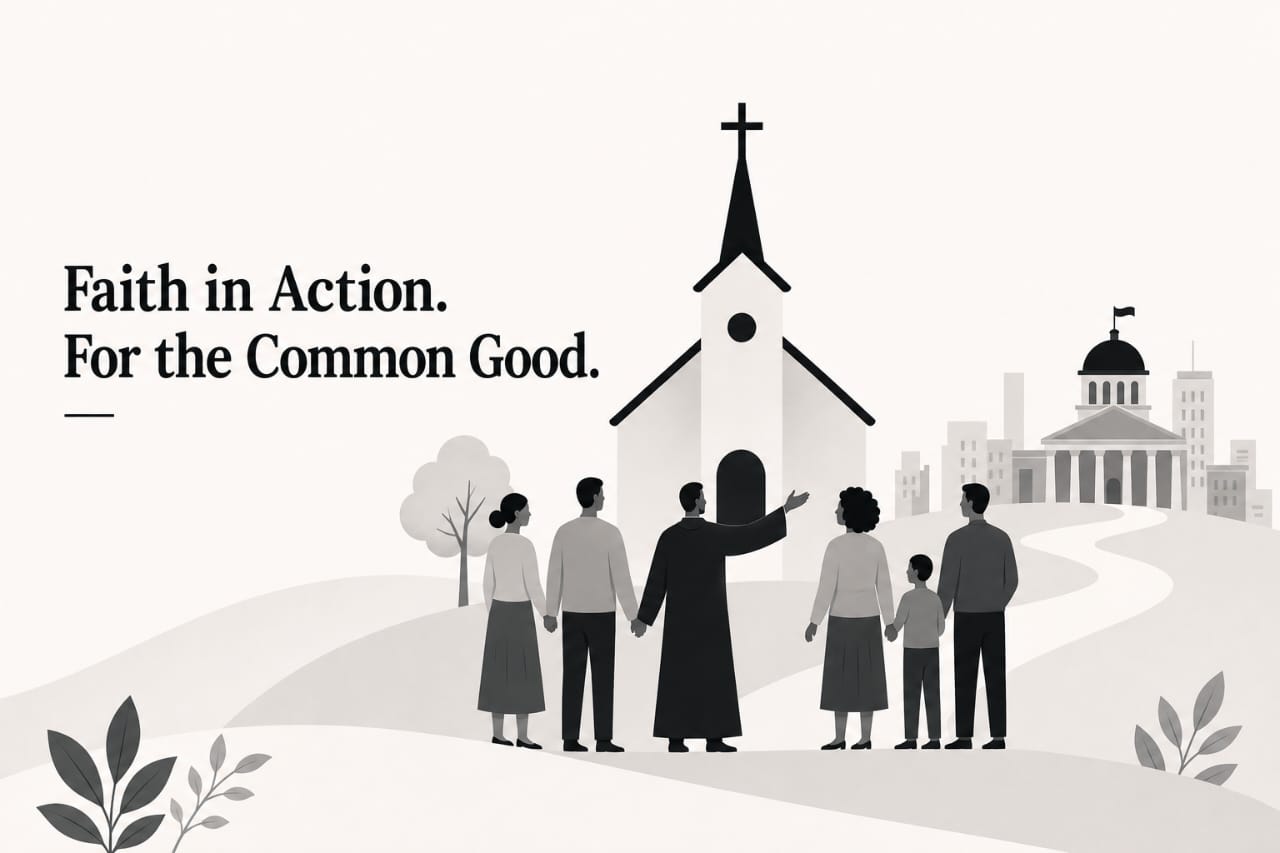
The church’s Political activism is grounded in its theological identity, its social mission, and the universal principles of Catholic Social Teaching.
The church’s political activism is not about supporting parties or candidates. It is about defending the moral order, educating citizens, and calling governments to fulfill the social contract. This is a non‑negotiable dimension of the church’s mission to build a just, peaceful, and prosperous society.
Some grounds for the church’s political engagement (non‑partisan) include:
Biblical Foundations
Prophetic witness
The prophets confronted kings not as party actors but as guardians of divine justice.
- Nathan confronted David (2 Sam 12).
- Elijah confronted Ahab (1 Kgs 21).
- John the Baptist confronted Herod (Mk 6:18).
These figures did not join political factions; they defended moral truth.
Jesus’ teaching on social responsibility
- “You are the salt of the earth… the light of the world” (Mt 5:13–16).
- “Render to Caesar what belongs to Caesar…” (Mt 22:21).
These passages affirm lawful civic participation while maintaining moral independence.
Magisterial Foundations
Gaudium et Spes 76: The Church “does not place her trust in the privileges offered by civil authority,” yet she “has the right to pass moral judgments even on matters touching the political order.”
Compendium of the Social Doctrine of the Church 565: The Church “cannot remain indifferent” to political life because politics is a high form of charity when directed toward the common good.
Evangelii Gaudium 183–185: Pope Francis insists that pastors must form consciences, not replace them—meaning the Church teaches principles, not party allegiance.
These sources show that political activism is part of the Church’s mission, but partisanship is forbidden.
The Church “cannot remain indifferent” to political life because politics is a high form of charity when directed toward the common good
The Church as Teacher of Civic Responsibility – When State Education Fails
When government‑controlled education becomes weak, ideologically compromised, or inaccessible, the Church must step in—not to replace the state, but to protect the dignity of the human person.
This includes teaching:
- Human rights
- Duties of citizenship
- The meaning of the social contract
- The moral responsibilities of leaders
- The lawful means of civic participation
This is consistent with Gravissimum Educationis 3, which states that the Church has a duty to educate when public systems fail to uphold human dignity.
Educating Citizens on the Social Contract.
The Church can teach citizens:
- Their rights (life, dignity, participation, justice).
- Their duties (obedience to just laws, participation in civic life, respect for others).
- Their entitlements (public services, security, fair economic structures).
- Their lawful avenues for demanding accountability (peaceful protest, voting, civic advocacy, legal redress).
This is not political partisanship; it is moral formation.
The Church’s Role in Guiding Lawful Civic Action – Calling Government to Its Duties.
The Church can legitimately:
- Speak publicly about corruption, injustice, or abuse of power.
- Advocate for policies that protect the poor, the youth, and the vulnerable.
- Demand transparency, accountability, and respect for human rights.
This aligns with Rerum Novarum, Pacem in Terris, and Caritas in Veritate, all of which affirm the Church’s duty to defend the common good.
Guiding Citizens When the Social Contract Is Breached.
The Church may instruct citizens on lawful responses such as:
- Peaceful civic mobilization
- Petitioning elected officials
- Engaging in community organizing
- Exercising voting rights responsibly
- Using legal institutions to challenge injustice
- Practicing nonviolent resistance (cf. Pacem in Terris 127)
This is political activism, but it is not partisan because it is rooted in universal moral principles.
How the Church Avoids Partisanship While Remaining Politically Active
The Church Must Avoid:
- Endorsing candidates
- Campaigning for parties
- Using pulpits for political propaganda
- Allowing politicians to manipulate religious platforms
The Church Must Embrace
- Teaching principles, not personalities
- Forming consciences, not political loyalties
- Advocating for justice, not party interests
- Defending the poor, not political elites
- Promoting peace, not political rivalry
Practical Pathways for Non‑Partisan Political Activism
- Civic education programs — teaching rights, duties, and democratic participation.
- Social doctrine workshops — grounding political engagement in Church teaching.
- Youth political formation — empowering young people to be responsible citizens.
- Community advocacy groups — mobilizing lawful civic action.
- Public moral statements — addressing national issues without endorsing parties.
- Dialogue platforms — facilitating peaceful engagement between citizens and leaders.
Patrick C. Okoye